Dog Claws, 90° Humidity, and the St. Louis Wood Rot Pipeline
Every August, Greater St. Louis hits the same combination: heat past 90°, relative humidity above 70%, and afternoon rain squalls rolling up the Mississippi River Valley. For a healthy deck, that's just uncomfortable weather. For a deck with an active dog on it, it's a slow structural failure — and most West County and Kirkwood homeowners won't see it coming until a board gives way underfoot.
Updated 2026-08-16 · Wood Rot Experts Editorial Team
The Science: How a Scratch Becomes Rot
Deck boards survive humidity because of sealant — a thin barrier keeping moisture out of the wood fiber. A dog's claws don't need to gouge a board to defeat that barrier. Repeated traffic creates micro-fissures: hairline breaks in the sealant that are invisible from standing height, especially on painted or stained surfaces that still look uniform.
Once that seal is breached, Mississippi Valley humidity gets in and doesn't leave. Trapped moisture feeds fungal spores already present in the wood and the surrounding soil — decay fungi are documented as an unavoidable, constant presence in outdoor air by the USDA Forest Products Laboratory's Wood Handbook chapter on biodeterioration. Fungi break down lignin — the compound that gives wood its rigidity — from the inside out. The board looks fine on top while going soft underneath. Paint doesn't rot; it just hides rot longer.
The 3 High-Risk Pet Zones
1. The Dog Door / Back Door Landing
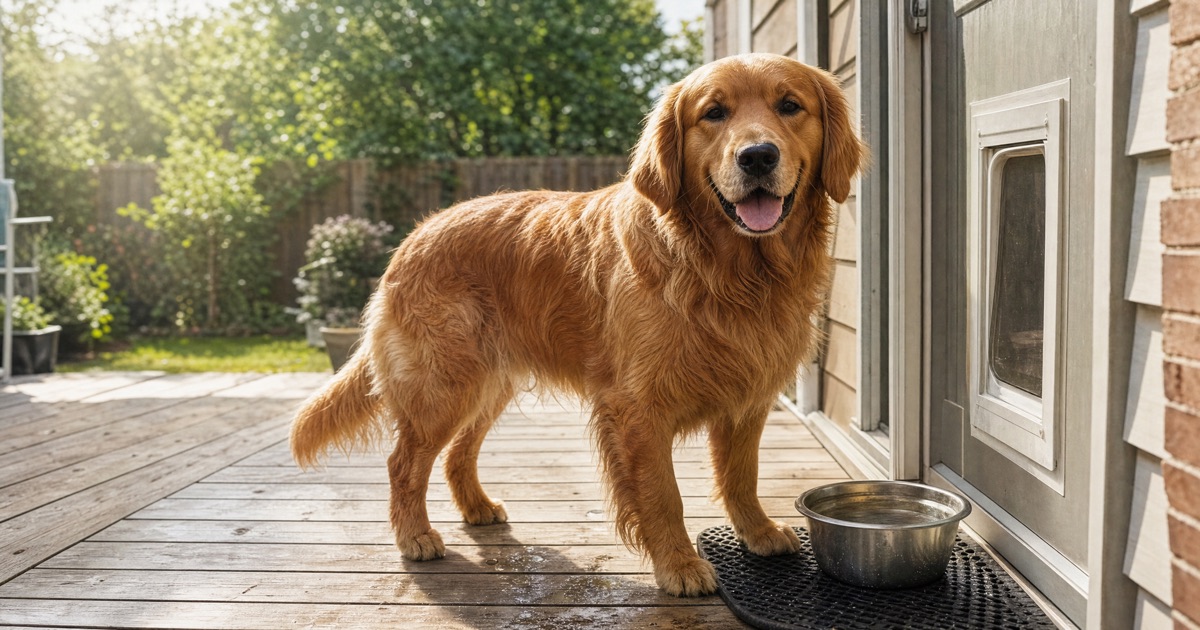
This is the highest-impact zone on the whole structure — every trip in and out concentrates claw contact on a few square feet. End-grain here (the cut ends of boards, the most porous part of any piece of lumber) absorbs moisture fastest and is usually the first place lignin breakdown shows up.
2. The Water Bowl & Rubber Mat Zone
Rubber mats look protective. They're actually a moisture trap — condensation forms underneath and never evaporates, sitting directly against the board in a dark, humid microclimate that fungal spores thrive in. Even pressure-treated lumber, chemically resistant to rot, has a limited service life under constant standing moisture.
3. The Railing Perch
Dogs that watch the yard from a railing put repeated lateral strain on balusters and the joints where they meet the top rail. That strain flexes tiny gaps open at the connection points — gaps that collect water after every squall and don't dry between rain events. St. Louis's regional humidity averages, tracked by the National Weather Service St. Louis office, show summer relative humidity regularly sitting above 70% even overnight — those gaps rarely get a real chance to dry out.
The pattern: none of these three zones look alarming from a standing inspection. The damage is underneath a healthy-looking surface, which is exactly why a five-minute check with a hand tool catches what a walk-through misses.
The 60-Second Self-Inspection: Screwdriver Poke Test
You don't need a contractor to get a first read on your deck. Grab a flathead screwdriver and check these points:
- Ledger board — where the deck attaches to the house. This is the single most safety-critical connection on the structure.
- Post bases — where support posts meet the deck surface or footings.
- Joists — the horizontal framing underneath, accessible from below or at board edges.
- The three pet zones above — dog door landing, water bowl area, railing base.
At each point, press the screwdriver tip firmly into the wood at a low angle — don't stab straight down, work it in along the grain. Healthy wood resists: you'll feel firm pushback and the tip won't sink past a few millimeters. Compromised wood tells you immediately. The screwdriver sinks with little resistance, or you feel soft-grain separation — a mushy, layered give instead of a clean resistant surface. That's active rot, not dirt or surface staining.
Not Sure What You're Feeling?
Don't guess, and don't wait for a board to fail with someone standing on it. Snap two photos of the area — the suspect board, and your dog too if you've got a moment — and send them in for a free remote assessment. A St. Louis wood rot repair specialist matched through Wood Rot Experts can tell you within 10 minutes whether it's cosmetic or structural, and what it will take to fix it before the next squall rolls through.
Related Guides
St. Louis Summer Humidity & Deck Rot
Why 70-80% average humidity keeps exterior wood above the fungal rot threshold all summer.
Deck Wood Rot Repair
What repair looks like once rot is confirmed, and what it typically costs.
Signs of Wood Rot
The full visual and tactile checklist beyond the screwdriver test.
Stop Wood Rot Before It Spreads
Wood rot doesn't improve on its own — it only gets worse and more expensive. Get matched with a vetted local specialist and discover how much you can save with expert repair.
Serving all of Greater St. Louis including Clayton, Webster Groves, Kirkwood, Ballwin, Chesterfield, and surrounding areas