Crawl Space Wood Rot Repair: What to Check First
By Jason Ellis · Published July 2, 2026 · Updated October 23, 2026
Crawl space wood rot repair starts with two questions: where is the moisture coming from, and what has happened to the framing? Drying the space and repairing damaged wood need a coordinated plan.
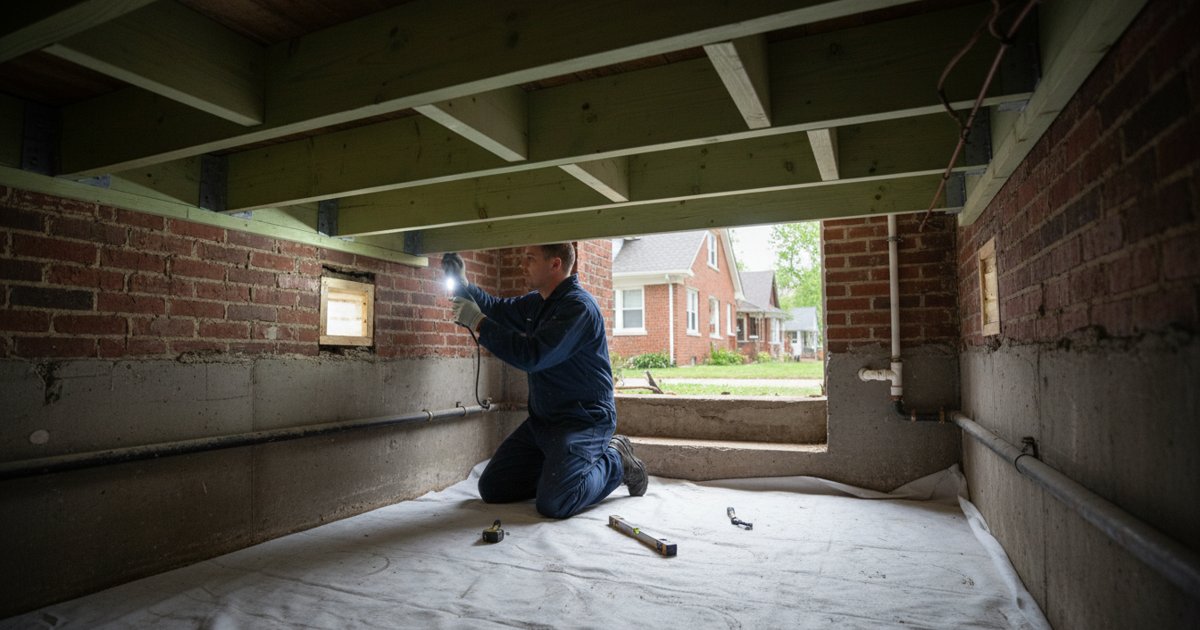
What can you record without entering the crawl space?
Start with observations you already have: a leak report, a musty smell, a floor that has changed, or photographs from an inspection. Note when the issue appeared and whether it followed rain or plumbing trouble. These details help an assessor plan a visit; they do not diagnose the cause.
Do not enter an unsafe or inaccessible space to complete a checklist. Stay away from sagging framing, standing water near electrical equipment, exposed wiring and unstable supports. If you suspect immediate collapse or another emergency, leave the affected area and contact local emergency services.
Which parts need assessment?
- Floor joists and subfloor: identify the rooms above the concern and any known leak.
- Beams, posts and connections: ask what supports the floor and whether the supporting points are sound.
- Sill plates and rim joists: ask about the perimeter where framing meets the foundation. See the sill-plate warning-sign guide.
A screwdriver test or a moisture reading alone cannot establish that a structural member is safe. The USDA Wood and Timber Condition Assessment Manual describes multiple inspection methods and a separate evaluation of structural design values.
Separate moisture work from structural work
The Building America crawl-space guide identifies several possible moisture sources, including plumbing leaks, rainwater entry and damaged or missing ground vapor barriers. Ask the assessor which source is supported by findings at your property.
A drainage, plumbing or humidity-control quote should explain its limits. A framing quote should identify the affected members and connections, access needs and any design or temporary-support requirements. A sealed crawl space does not by itself restore a damaged joist.
What should a repair proposal explain?
Ask for the findings, the proposed repair area, the moisture work, and who is responsible for each part. Establish whether further investigation or engineering is needed, who checks local permit requirements, and how hidden damage changes the scope. Do not cut, jack or remove loaded framing based on an online guide.
Our structural wood repair guide helps you compare those proposals. The epoxy versus replacement guide explains why a cosmetic patch and a structural repair are different decisions.
Planning a request in St. Louis or elsewhere
For the existing local guide, see St. Louis wood rot repair. Wherever the property is located, include its actual city and state. A guide or submitted request does not establish that a provider is available there.
Crawl space repair questions
Does a damp crawl space mean the wood is rotten?
No. Dampness is a reason to investigate moisture, but it does not establish decay or remaining strength. A qualified assessment should distinguish surface conditions, insect damage and deterioration within the wood.
Will encapsulation repair damaged floor joists?
A moisture-control proposal and a framing-repair proposal address different tasks. Ask which work controls water or humidity and which work addresses damaged members and connections. Do not assume one includes the other.
Can epoxy repair a crawl-space beam?
Do not select a filler from a photo or a visible percentage of damage. A structural assessment must establish the remaining sound material, loads and connections before specifying a repair method.
How long does crawl space wood rot repair take?
There is no reliable duration without a defined scope. Access, moisture correction, engineering, permits, materials and the extent of hidden damage can all affect the schedule. Ask for a written sequence and what could change it.