Sill Plate Rot Warning Signs
The sill plate is the timber your entire house frame sits on. When it decays you usually notice the symptoms upstairs — sticking doors, sloping floors — long before you notice the wood.
Why This One Is Different
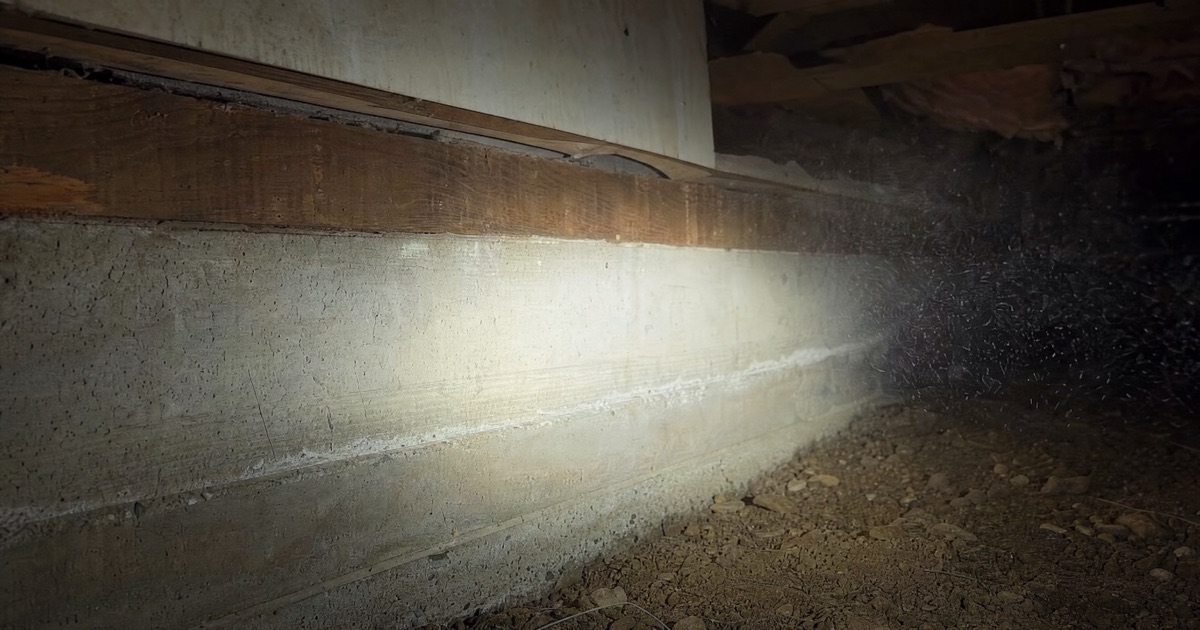
Most wood rot is a finish problem wearing structural clothing. A rotted fascia board looks alarming and costs a few hundred dollars. The sill plate inverts that: it is easy to overlook, sits where nobody looks, and carries every pound of the structure above it into the foundation. Rot in a sill is not a repair you schedule around your calendar.
It also hides better than any other rot location. The sill is behind siding, under the first floor, at the top of a foundation wall — frequently in a crawl space nobody has entered in years. By the time damage is visible from outside, the decay has usually been active for a long time.
What to Look For
Doors and windows sticking on one wall
The frame above the sill has settled unevenly. People blame humidity for years before checking the sill.
Floors soft or sloping near an exterior wall
Joists bearing on a compromised sill lose support at their ends.
Baseboards pulling away from floor or wall
Small movement in the framing shows up first at rigid trim joints.
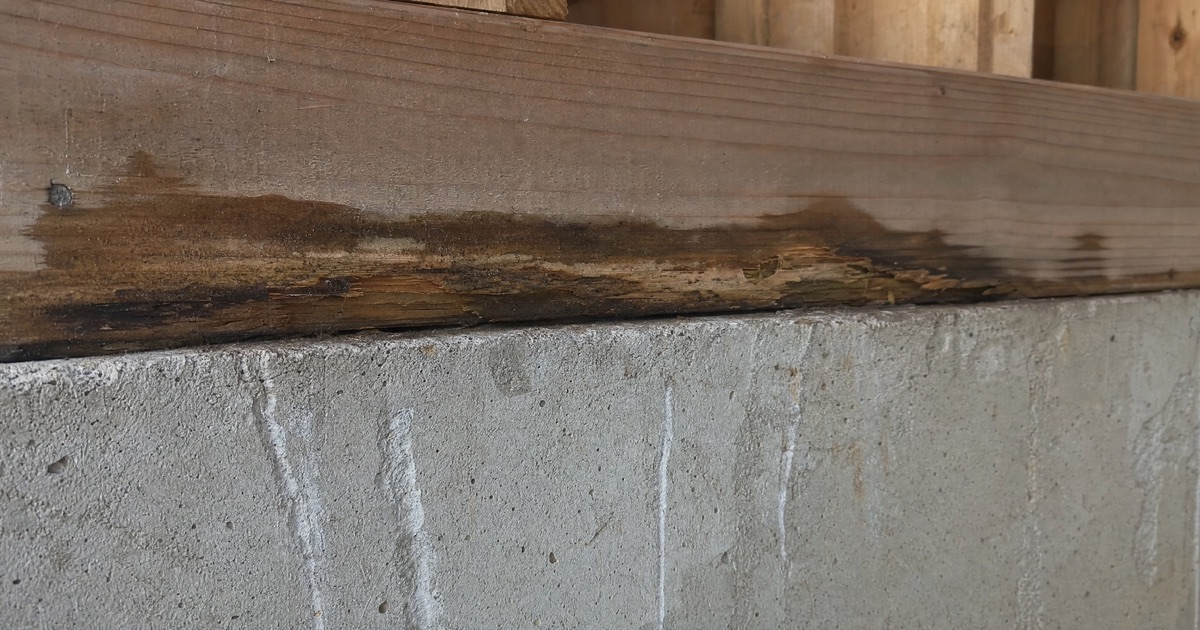
Crumbling or dark wood at the foundation line
The direct view of the sill, visible from a basement, crawl space, or where siding stops short.
A musty smell in a basement or crawl space
Active decay fungi produce it. Persistent musty odor near framing is a reason to probe.
Visible gaps between the framing and foundation
Section loss in the sill lets the wall above drop. This is a late sign, not an early one.
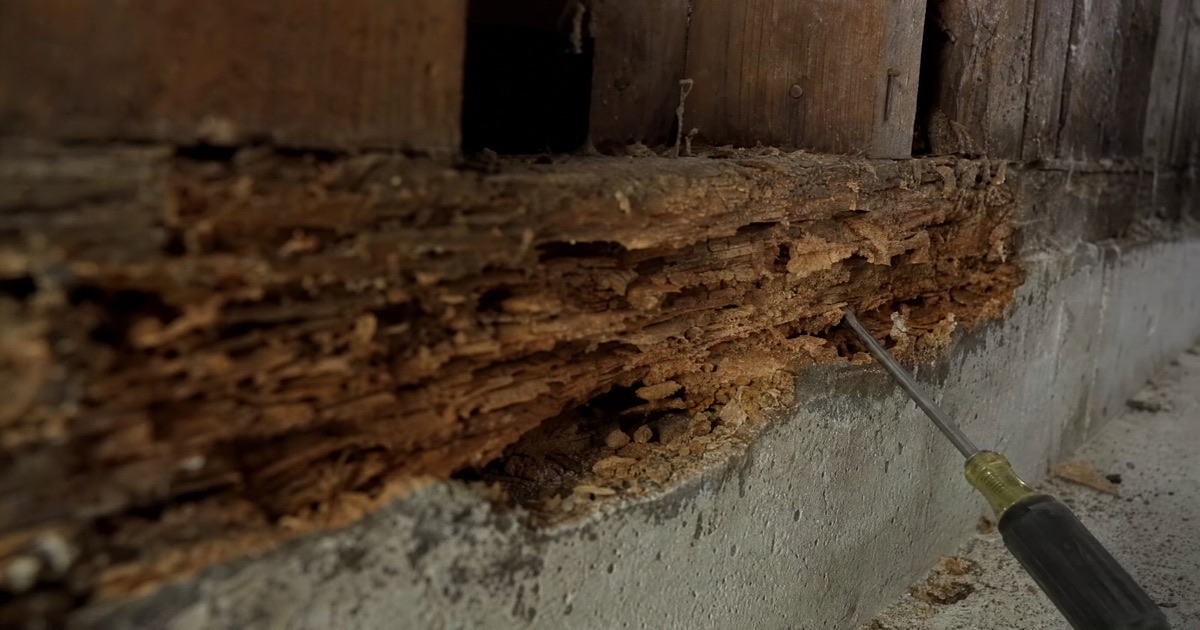
The confirming test is physical, not visual: press a screwdriver firmly into the sill where you can reach it. If the tip sinks more than about a quarter inch without resistance, decay is active. Our inspection checklist walks the rest of the house the same way.
Where the Water Comes From
Sill rot is a drainage story more often than a roofing one. Grade that slopes toward the house, a downspout dumping at the foundation, sprinklers hitting the wall daily, or a crawl space without a vapor barrier will all hold moisture against the sill indefinitely. A failed deck ledger is another common route — water that gets behind a ledger runs straight down the rim and into the sill, which is why deck framing decay and sill decay so often appear together. If you are already dealing with the first, read deck joist rot repair cost and have the sill checked at the same visit.
Whether the decay stays put or spreads depends on what type it is. Dry rot versus wet rot matters more here than anywhere else in the house, because a fungus that travels through masonry has a foundation wall to travel along.
What Repair Looks Like
Sill repair generally means temporarily supporting the framing above, removing the compromised run, installing new treated material with proper separation from the masonry, and correcting the drainage that caused it. Isolated moderate decay is occasionally a consolidation candidate, but a continuously loaded member has the least tolerance for a partial fix — epoxy versus replacement covers where that line sits. Either way this is structural repair, not carpentry.
Local conditions shape which pathway is likeliest. Freeze-thaw regions with older foundations and heavy spring rain produce grade- and downspout-driven sill damage — St. Louis wood rot repair covers that housing stock. Dry marine climates produce it through irrigation and slab-adjacent framing that never dries — San Diego dry rot repair covers those pathways.
Common Questions
What is a sill plate and why does it matter?
The sill plate is the horizontal timber bolted to the top of the foundation wall — the piece the entire wood frame of the house sits on. Every load above it passes through it into the foundation. That is why decay here is categorically different from rot in trim or siding: it is not a finish problem, it is the transfer point between the house and what holds it up.
What are the earliest signs of sill plate rot?
Doors and windows on one wall that begin sticking or fail to latch as they used to, baseboards separating from the floor or wall, a floor that feels soft or slopes near an exterior wall, and visible crumbling or dark staining where the framing meets the foundation. In a basement or crawl space, a screwdriver pressed into the sill that sinks without resistance is the definitive check.
How does water get to a sill plate?
Almost always from below or behind rather than above: grade sloping toward the house, downspouts discharging at the foundation, irrigation soaking the wall, a failed deck ledger channeling water inward, or a crawl space with no vapor barrier holding humidity against the framing. In each case the sill stays damp continuously, which is exactly what decay fungi require.
Can a rotted sill plate be repaired with epoxy?
Rarely as the whole answer. Isolated, moderate decay in a section of sill can sometimes be consolidated, but a sill plate is load-bearing and continuously loaded, so the section-loss threshold that governs any structural member applies with less tolerance. Significant sill decay is typically addressed by temporarily supporting the framing above and replacing the affected run.
Is this urgent?
More urgent than most rot, yes. Sill damage does not stay local — it lets the framing above settle, which is what produces the sticking doors and sloping floors people notice first. Those symptoms mean load is already redistributing. It does not require panic, but it does require an assessment rather than a wait-and-see.
Find a Specialist Where You Are
Rot behaves differently by climate, and so does the repair. Start with your market.
Not ready to describe your project yet?
Get the free 20-point wood rot inspection checklist and check your home yourself before calling anyone.
Not Sure What You Are Looking At?
Describe what you are seeing and we will match you with a wood rot specialist who works your area. Free for homeowners.
Get Matched With a Specialist