Epoxy Repair vs Wood Replacement
Consolidation restores wood that still has structure left in it. Replacement is for wood that does not. The threshold on a load-bearing member is roughly 40% section loss — everything else is judgment.
What Epoxy Repair Actually Does
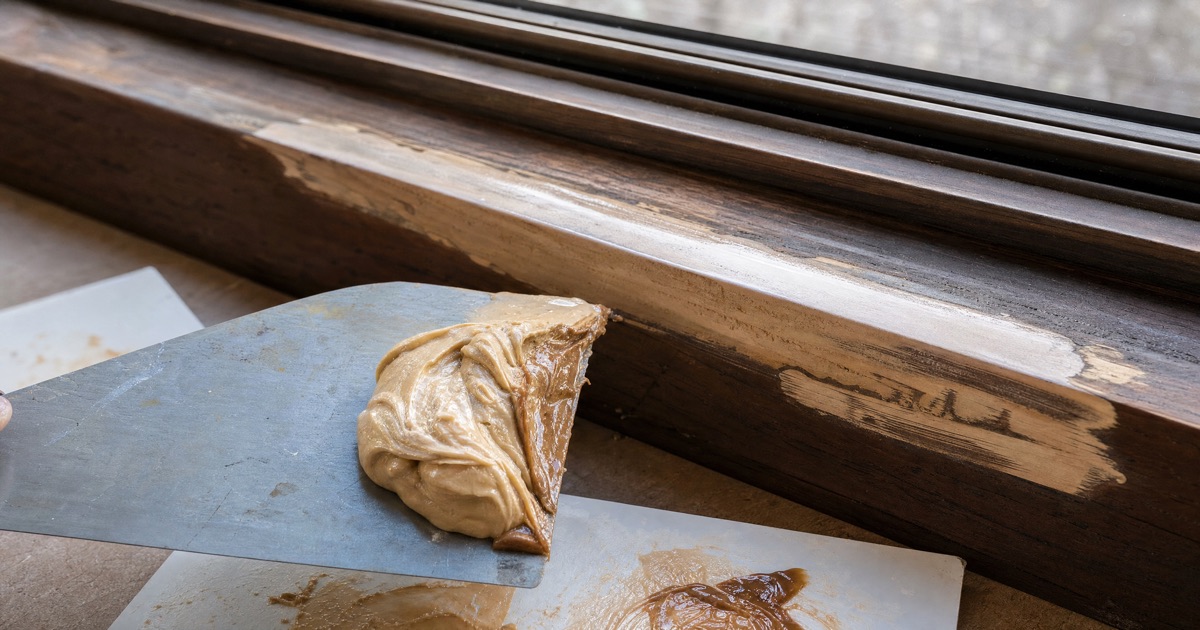
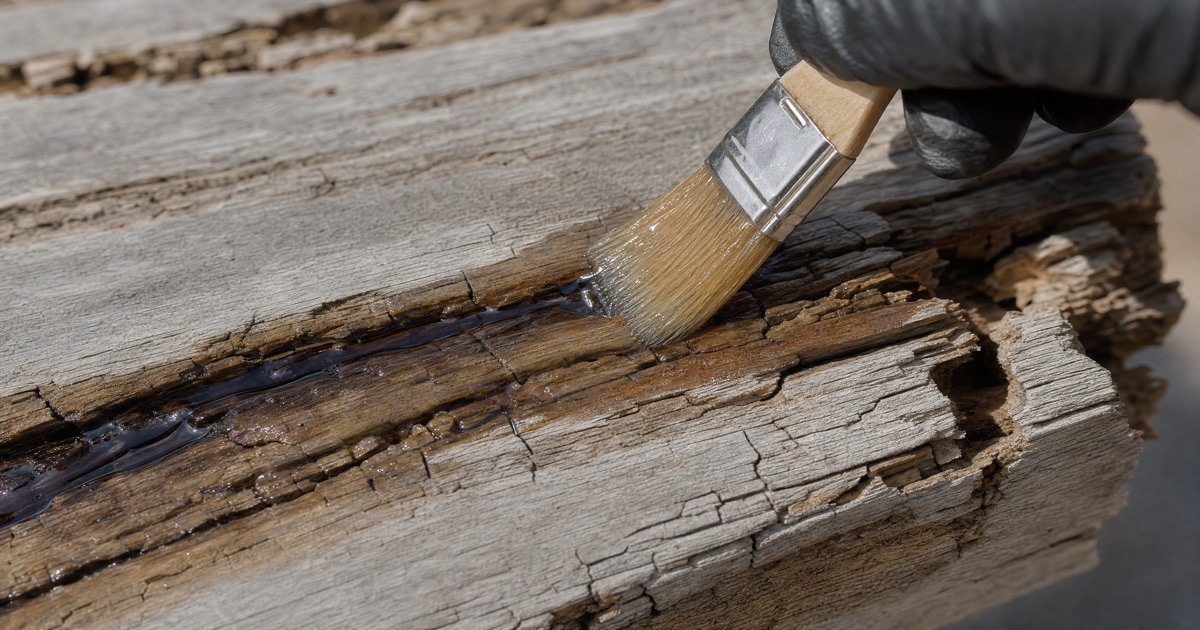
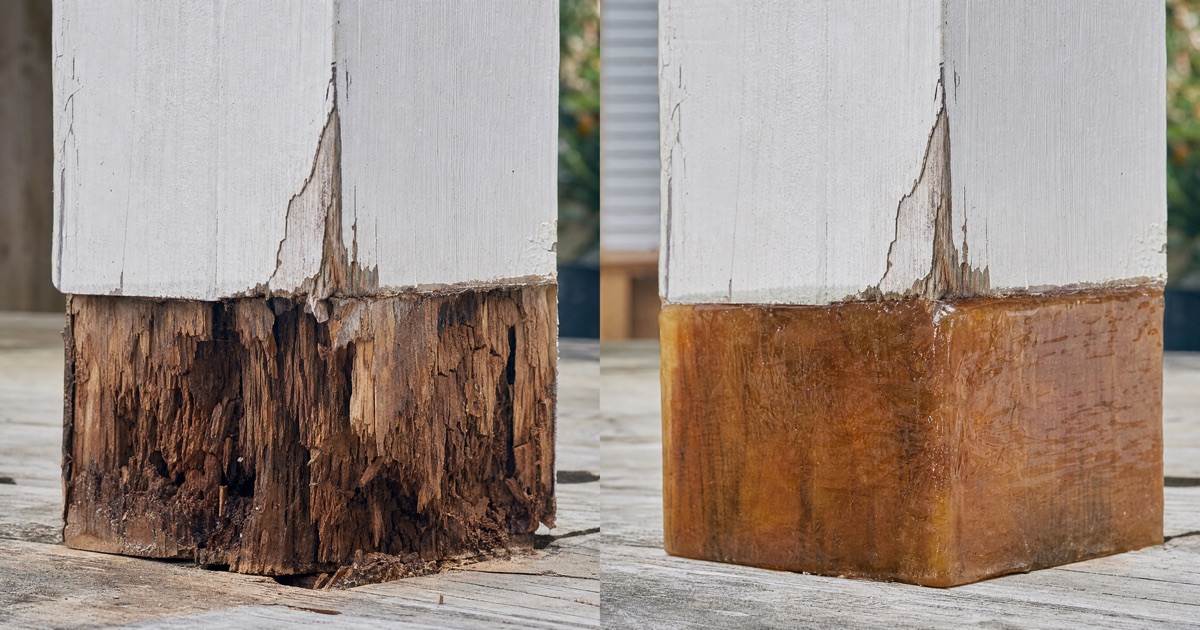
A proper epoxy repair is two steps, and skipping the first is the most common way these fail. A liquid consolidant is introduced into the softened fibers, where it penetrates and cures to re-harden wood that had lost its integrity. Only then does a two-part filler go into the voids, get shaped to the original profile, and take primer and paint. The result carries fasteners and sheds water like sound wood.
What epoxy cannot do is manufacture structure that is no longer there. Consolidant re-hardens existing fiber; it does not replace missing cross-section. That single fact is the whole decision rule.
Consolidation Is Correct When
- Decay is surface-level to moderate and the member retains most of its section
- The wood can be dried before treatment
- The moisture pathway feeding the decay can be corrected
- The profile matters — historic millwork, custom trim, original sash and sill
- The member is trim, fascia, sill, jamb, or a similar non-critical element
Replacement Is Correct When
- A structural member has lost roughly 40% or more of its cross-section
- Decay runs through a bearing point, hanger contact, or connection
- The wood is saturated and cannot be dried in place
- The water source cannot be corrected, so any repair is temporary
- Damage is widespread enough that piecemeal repair costs more than replacement
Where Consolidation Wins Decisively
Historic millwork is the clearest case. Original sash, sills, porch columns, and decorative trim were milled to profiles that no lumberyard stocks, often from old-growth material denser than anything available today. Replacing them means either an approximation or expensive custom milling, and the approximation is what usually gets installed. Consolidation keeps the original member and its profile, which is why it is generally both cheaper and the better result on older housing stock — St. Louis wood rot repair deals with this constantly across the historic districts.
The other decisive case is concealed damage found during an inspection. When a report flags several elements at once, replacement of everything flagged is the reflex quote — and frequently over-scoped, because some of those elements are consolidation candidates. San Diego dry rot repair covers how that plays out where inspection-driven work is common.
Where Epoxy Is a Shortcut, Not a Repair
Filler applied over wood that is still wet, still fed by a leak, or still growing active decay is cosmetic work sold as a repair. It seals moisture in, hides the progression, and buys a season or two before the same spot fails worse. If the fungus is a type that travels beyond the wet area, a surface patch is even less defensible — dry rot versus wet rot covers why extent has to be established first.
On load-bearing wood the stakes change entirely. A consolidated joist that should have been replaced is a structural decision made for cost reasons — deck joist rot repair cost covers the sister-versus-replace call, and sill plate rot warning signs covers the member where consolidation is least often appropriate.
Common Questions
Is epoxy a permanent fix for rotted wood?
Done correctly, on an appropriate member, with the moisture source corrected, an epoxy repair lasts on the order of 15 to 20 years — comparable to the finish system protecting it. Done as a cosmetic patch over wood that is still wet or still fed by a leak, it fails quickly and traps moisture behind it, which is worse than not repairing at all.
When does wood have to be replaced instead?
The working threshold on a structural member is roughly 40% cross-section loss — past that, consolidation is not restoring enough capacity to be relied on. Replacement is also correct when decay runs through a bearing point or connection, when the member is saturated and cannot be dried, and when the moisture pathway cannot be corrected.
Why do contractors default to replacement?
It is easier to price, easier to schedule, and requires no specialist technique. Replacement is a legitimate repair and often the right one — the problem is that it gets proposed as an opening position rather than a finding, particularly on trim and millwork where consolidation would have cost far less and preserved the original profile.
Can epoxy be painted and fastened like normal wood?
Yes. Cured two-part epoxy filler accepts sanding, shaping, primer, paint, and fasteners much like sound wood, which is why it can restore an original profile that stock replacement material cannot match.
Does epoxy repair work on structural members at all?
On some, within limits. Consolidation plus reinforcement can restore a joist or post with moderate, localized decay. It is not a substitute for replacing a member that has lost significant section, and the decision belongs to someone assessing that member specifically — not to a general rule applied across a whole frame.
Find a Specialist Where You Are
Rot behaves differently by climate, and so does the repair. Start with your market.
Not ready to describe your project yet?
Get the free 20-point wood rot inspection checklist and check your home yourself before calling anyone.
Not Sure What You Are Looking At?
Describe what you are seeing and we will match you with a wood rot specialist who works your area. Free for homeowners.
Get Matched With a Specialist