Deck Joist Rot Repair Cost
Contained framing repair on a deck commonly runs $800 – $2,500. What moves that number is not square footage — it is which members are involved and whether anyone actually probed them.
You Are Not Buying Square Feet
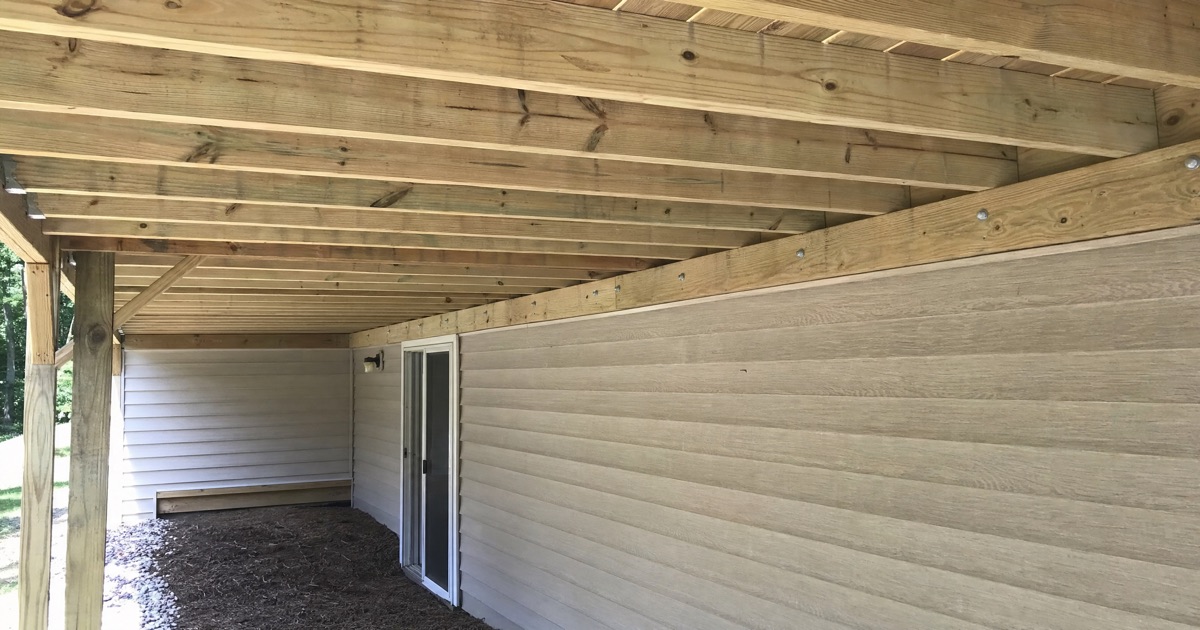
Deck repair pricing confuses people because it does not scale with deck size the way replacement does. A small deck with a rotted ledger can cost several times what a large deck with twenty bad boards costs. The framing hierarchy — boards, then joists, then beams, posts, and the ledger — is what sets the price, because each step up carries more load and less tolerance for a partial fix.
This is also why the walk-on surface tells you so little. Decking gets sun and airflow. The joists underneath sit in shade and hold moisture, which is why the framing is frequently in worse condition than the deck you are standing on.
Cost by Scope
| Scope | Typical range | What it means |
|---|---|---|
| Surface and board-level repair | $400 – $1,500 | Decking replaced, framing sound. The outcome everyone hopes for. |
| Contained framing repair | $800 – $2,500 | A few joists sistered or replaced, post base corrected, moisture pathway fixed. |
| Structural repair, load-bearing members | $1,500 – $5,000 | Multiple joists, beam or post replacement, ledger reattachment. |
| Full deck rebuild | $5,000 – $20,000 | Majority of framing compromised. Size, height, and access drive the spread. |
Ranges reflect typical residential work and are not a quote. For a starting figure on your own damage, the cost calculator takes about thirty seconds, and the full cost guide covers every other repair type.
What Actually Moves the Number
Which members are affected
Boards are the cheap answer, joists the middle one, ledger and posts the expensive one. A ledger finding changes the project category, not just the price.
Access underneath
A ground-level deck you can crawl under prices very differently from an elevated balcony requiring staging. Same rot, different labor.
Whether the water source is fixable
Correcting a failed membrane, a post base wicking off concrete, or sprinkler overspray is part of the repair. Skipping it makes the repair temporary.
Extent discovery
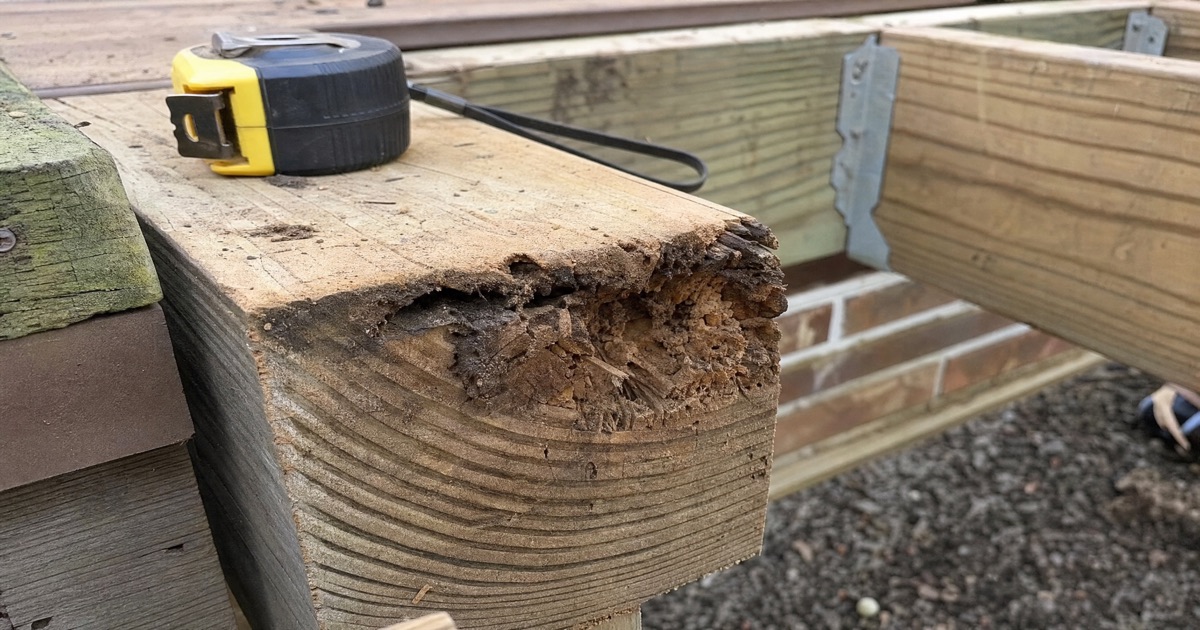
Framing decay is routinely larger than it appears at the opening. A quote given without probing is an estimate of the visible part only.
Sister, Replace, or Rebuild
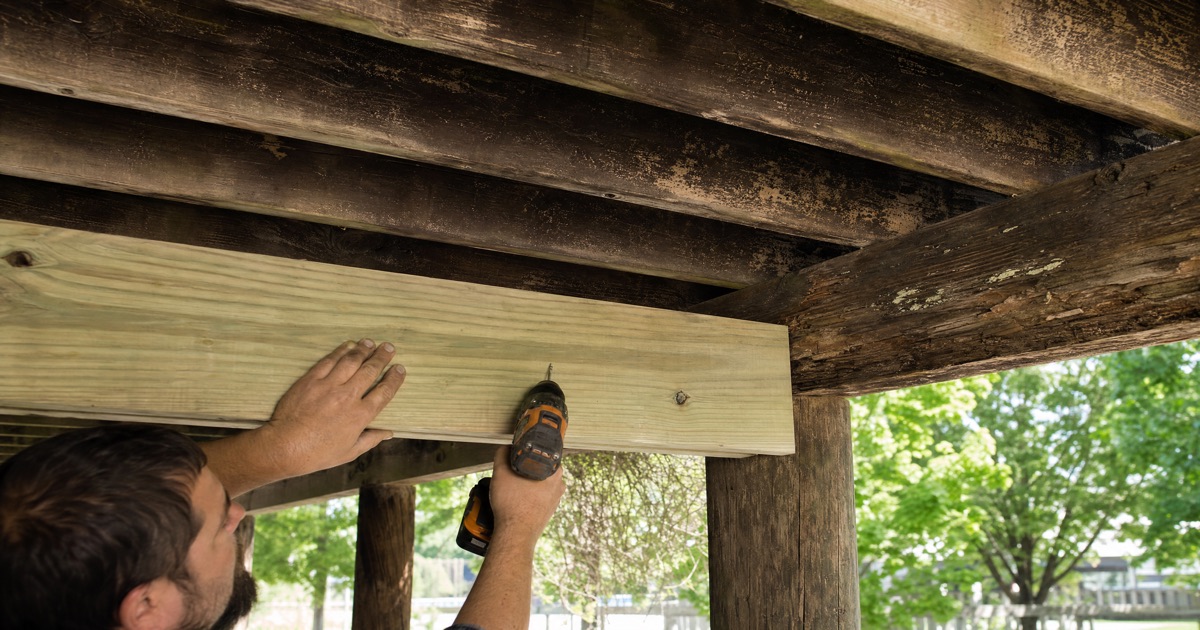
Sistering bolts a new member alongside the old one and lets the two share the load. It is the cheapest structural answer and it is legitimate when the existing joist retains sound section and the decay is not sitting at a bearing point or hanger. Replacement is correct once section loss is severe, decay runs through the bearing, or the member is too far gone to contribute.
Rebuild is the honest answer when the majority of the framing is compromised or a ledger has failed across its run. The thing to watch is sequence: rebuild should be a conclusion reached after assessment, not the opening quote. The same logic applies to the wood itself — epoxy consolidation versus replacement covers where each is genuinely appropriate.
One caveat worth taking seriously: if decay reached the deck framing, check where else that water went. Sill plate rot warning signs covers the failure that starts at a ledger and ends inside the house. And knowing which type of rot you have tells you whether the damage is likely bounded by the wet area or traveling past it.
Regional Cost Notes
Labor rates and typical failure modes both vary by market. In humid, freeze-thaw regions the damage tends to be visible and water-driven at joints — St. Louis wood rot repair covers that pattern. In marine-influenced dry climates the framing rots while the boards look fine, and a large share of the work follows a required inspection — San Diego deck repair covers that case, including SB 326 and SB 721 findings.
Common Questions
How much does it cost to repair a rotted deck joist?
Repairing framing on a deck typically runs $800 – $2,500 for a contained problem — a few joists sistered or replaced, plus the moisture correction that caused it. Board-level and surface work alone is closer to $400 – $1,500. A deck with widespread framing decay, ledger failure, or compromised posts moves into rebuild territory, commonly $5,000 – $20,000 depending on size, height, and access.
Why did two contractors quote wildly different numbers for the same deck?
Almost always because they scoped different things. A quote priced off the walk-on surface covers boards. A quote from someone who pulled a board, probed the joists, and checked the ledger connection covers framing. Both can be honest prices; only one of them is pricing the actual condition. Ask each quote which members were physically probed.
Can a rotted joist be sistered instead of replaced?
Yes, when the existing member retains enough sound section to carry load alongside the new one and the decay is not at a bearing point or hanger. Sistering is faster and cheaper. It is the wrong answer when section loss is severe, when decay runs through the bearing, or when the moisture pathway will simply attack the new member too.
Is a full deck rebuild ever the cheaper option?
Sometimes, and an honest specialist will say so. Once you are replacing a majority of the framing, working at height with difficult access, or dealing with a failed ledger connection across the whole run, piecemeal repair stops being economical. The distinction worth protecting is that this should be a finding, not an opening position.
Does insurance cover rotted deck framing?
Gradual decay is generally excluded as a maintenance issue. Damage that results directly from a covered peril — a burst pipe, storm-driven intrusion, wind damage — may be covered. Document with photos before anything is disturbed and file promptly.
Find a Specialist Where You Are
Rot behaves differently by climate, and so does the repair. Start with your market.
Not ready to describe your project yet?
Get the free 20-point wood rot inspection checklist and check your home yourself before calling anyone.
Not Sure What You Are Looking At?
Describe what you are seeing and we will match you with a wood rot specialist who works your area. Free for homeowners.
Get Matched With a Specialist