Dry Rot vs Wet Rot
Wet rot stays where the water is. Dry rot carries its own moisture and travels into wood that is dry — which is why the two look similar on the surface and cost very different amounts to repair.
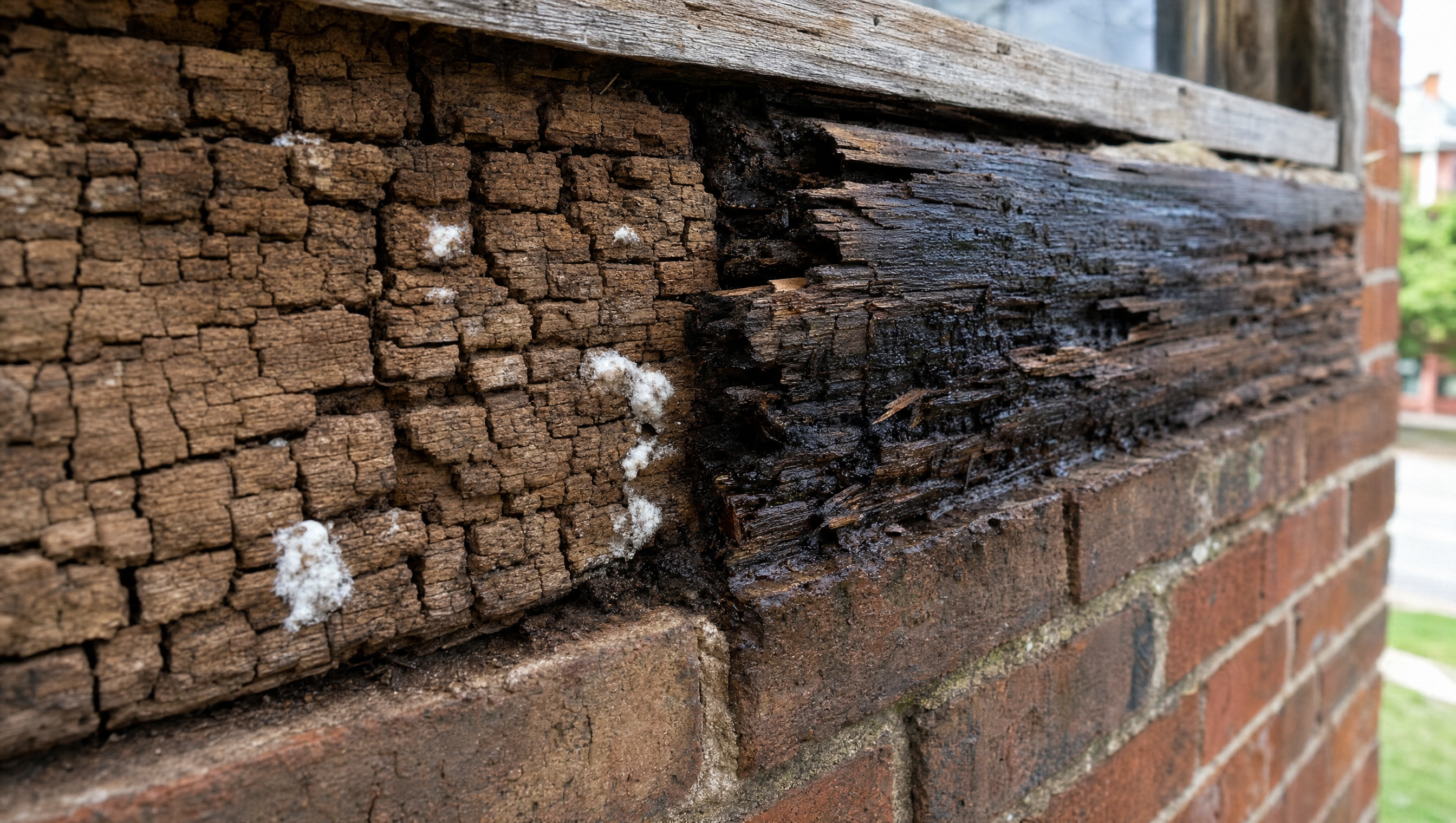
Both Are Fungi. Only One Travels.
Dry rot and wet rot are both wood-decaying fungi that digest the cellulose and lignin holding timber together. They arrive the same way — sustained moisture in wood, usually above roughly 20% moisture content — and they both end in wood that has lost the strength it was installed to provide.
The difference that matters to a homeowner is mobility. Wet rot is a local problem: it colonizes wet wood and stops when that wood dries. Dry rot produces strands that can conduct water from a damp source into timber that is not damp at all, and those strands pass through and across masonry to get there. A wet rot repair is generally as big as the wet patch. A dry rot repair is as big as the growth, which is a different and usually larger number.
Telling Them Apart
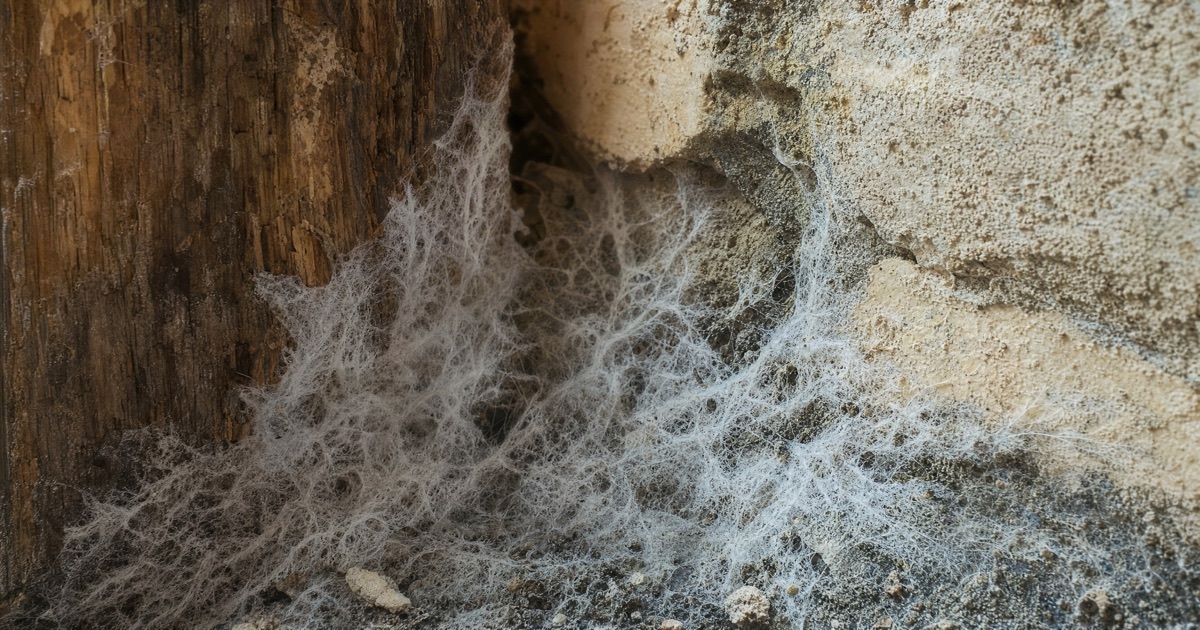
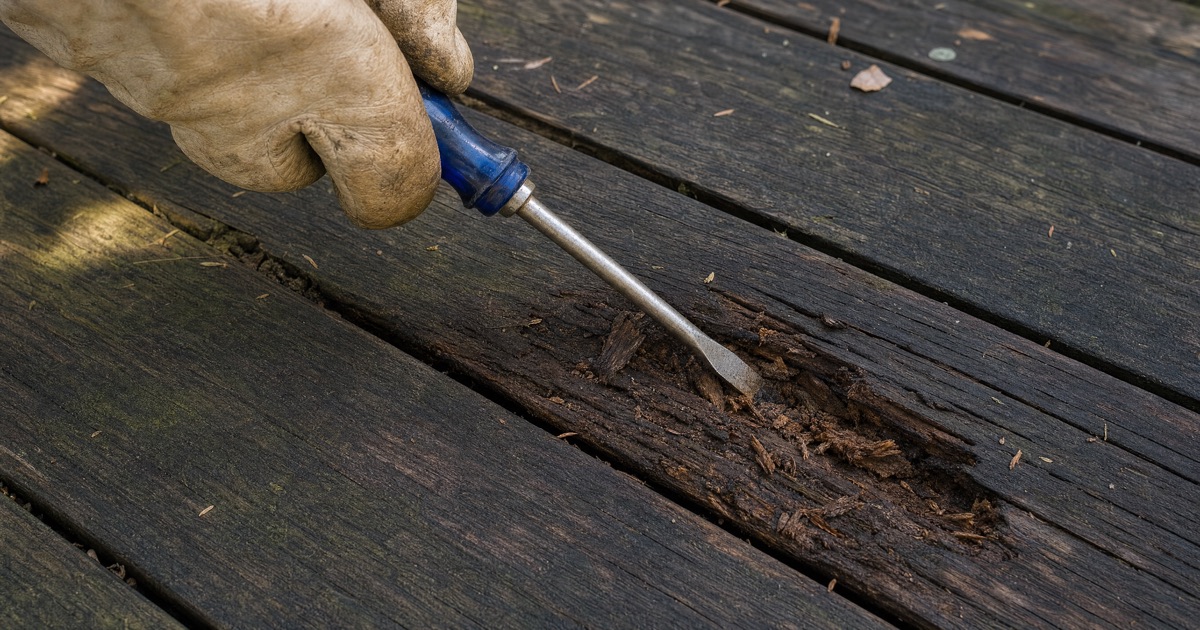
The most reliable visual signal is how the wood has failed. Dry rot shrinks the timber and cracks it into distinct cubes, across the grain as well as along it, and the surface often carries grey-white sheets or strands. Active growth throws a fine rust-red spore dust that settles on nearby surfaces. Wet rot is darker and softer, tends to stay stringy rather than cubic, and rarely shows dramatic surface growth — you find it by pressing a screwdriver into a suspect area and feeling it sink.
Side by Side
| Dry Rot | Wet Rot | |
|---|---|---|
| Appearance of the wood | Brown, shrunken, cracked into cube-like blocks across and along the grain | Darker than sound wood, soft and spongy, often stringy when probed |
| Growth you can see | Grey-white sheets or cotton-wool strands; rust-red spore dust near active growth | Usually little visible growth — dark staining and softness are the tell |
| Where it stays | Travels beyond the wet area, through masonry and behind finishes | Confined to wood that is actually damp |
| Smell | Damp, mushroom-like, noticeably musty | Musty, generally milder |
| What stops it | Removing the moisture source plus tracing and removing all active growth | Removing the moisture source — decay halts once the wood dries |
| Typical repair scope | Larger than it looks; extent must be established before pricing | Usually bounded by the visibly damp area |
Why the Same Fungus Behaves Differently by Climate
Regional context changes which of the two you are most likely to be looking at. In a humid, freeze-thaw climate, moisture reaches wood through cracked paint, failed caulk, and driven rain, and it soaks a defined area — so wet rot on fascia, sills, and deck framing is the common finding. St. Louis wood rot repair covers what that pattern looks like on the region's older housing stock.
In a dry, marine-influenced climate the water arrives more slowly and from less obvious places — overnight humidity, irrigation, a pinhole in a deck membrane — and it collects behind assemblies that cannot dry. That is ideal territory for concealed, traveling decay, which is why so much California damage surfaces during an inspection rather than at the surface. San Diego dry rot repair covers the moisture pathways specific to that climate.
What Repair Actually Involves
Both repairs start in the same place and it is not the wood: find and fix the water. Replacing a decayed member without correcting the moisture pathway produces a new decayed member on a delay. Once the source is handled, moderately damaged timber can usually be consolidated and filled rather than torn out — see epoxy consolidation versus replacement for where that line sits.
The place this becomes urgent is load-bearing wood. Decay in a joist, post, or sill plate is a structural question, not a cosmetic one — sill plate rot warning signs covers what to look for before it moves the framing above it.
Common Questions
Is dry rot worse than wet rot?
Generally yes, because of how it spreads. Wet rot stays where the water is — remove the moisture source and the decay stops advancing. Dry rot can transport moisture through its own strands, which lets it travel across masonry, behind plaster, and into timber that is otherwise dry. That means a wet rot repair is usually bounded by the wet area, while a dry rot repair has to chase the full extent of the growth.
Why is it called dry rot if it still needs moisture?
The name is misleading and always has been. Dry rot needs moisture to establish, typically around 20% wood moisture content. It earns the name from what it leaves behind — wood that ends up dry, brown, cracked into cubes, and crumbling — and from its ability to keep growing into timber that is no longer wet.
Can I tell them apart myself?
Often, at a basic level. Cuboidal cracking, a fine reddish-brown spore dust, and grey or white strands running across surfaces point to dry rot. Darker, softer, stringy wood confined to an obviously damp area points to wet rot. What you cannot determine visually is the extent — dry rot in particular is routinely far larger behind the surface than it appears at it.
Does the repair differ?
Yes, in scope more than technique. Both are repaired by correcting the moisture source, removing or consolidating the affected wood, and restoring structural integrity. Dry rot repair additionally has to establish how far the growth traveled beyond the visibly damaged member, because leaving active growth behind guarantees a return.
Find a Specialist Where You Are
Rot behaves differently by climate, and so does the repair. Start with your market.
Not ready to describe your project yet?
Get the free 20-point wood rot inspection checklist and check your home yourself before calling anyone.
Not Sure What You Are Looking At?
Describe what you are seeing and we will match you with a wood rot specialist who works your area. Free for homeowners.
Get Matched With a Specialist